


Audible: Audio Entertainment
Audible, Inc.
I came away from Audible: Audio Entertainment thinking of it less as a simple audiobook player and more as a listening library that can fit around the awkward gaps in a normal day. As an app in the Books & Reference category, it makes spoken books and podcasts easy to keep close, whether I am walking, cooking, commuting, or trying to rest my eyes after work. My overall view is positive: it is especially convincing for people who want a dependable way to make progress through books without sitting down to read them, although the wider catalogue and purchasing model require some attention before it becomes a regular habit.
The app is free to install, and its Teen content rating makes it broadly suitable for older children and adults, with the usual need to check individual titles for subject matter. Audible, Inc. has built a service that feels mature rather than experimental. That impression is supported by its 4.6 average from around 1.7 million ratings and more than 100 million installs. Those figures do not replace personal testing, but they do match my experience of an established app with a polished listening workflow.
How Audible fits into everyday listening
The most useful change for me was treating listening as a series of small appointments instead of one long session. I can start a book while preparing breakfast, pause it when I need both hands, and continue later without having to remember where I stopped. That sounds basic, but it is the difference between an audiobook app becoming part of a routine and becoming another unused icon.
Related News

A realistic example is a weekday commute. I might use a podcast for the first part of the trip, switch to a nonfiction book when I have more attention, and return to the same chapter during an evening walk. The playlist approach makes those changes less disruptive than opening separate services for every type of audio. It also suits people who do not want their reading choices limited to one format.
Audible’s store summary points toward books and podcasts across true crime, news, fiction, and other subjects, and that range is important. I can use the app for a focused novel one day and lighter spoken content the next. The experience is not only about finishing famous books; it is also about finding something that matches the amount of attention I have available.
Related News

Why WhatsApp Messenger Still Makes Everyday Communication Feel Easy

Jurassic World: The Game Is the Better Dino Tycoon for Strategic Players

Threads in Real Life: Who Should Join, Lurk, or Leave

How SHEIN Turned Shopping Into an Endless Content Feed

How to Make Fortnite Feel Smarter on Mobile

Should You Switch to Microsoft Outlook on Mobile?
The interface is strongest when I already know what I want to hear. Search and library browsing make it practical to return to a chosen title, while playlists help organize listening around a mood or activity. I found this more useful than relying entirely on a home screen filled with recommendations. A personal queue reduces the temptation to spend the whole evening browsing instead of listening.
One small but meaningful habit is to separate books by purpose. I prefer keeping a demanding nonfiction title available for quiet walks and a more relaxed novel for household tasks. This avoids the common problem of choosing an overly complicated book when my attention is divided. The app becomes more effective when the playlist reflects real situations rather than an idealized reading schedule.
Why the audio format works so well here
Spoken books are not merely printed books read aloud. A good narration adds pacing, emphasis, and character, and Audible is designed around that experience rather than treating audio as an afterthought. I noticed that I was more willing to continue with long chapters because the act of listening felt separate from screen time. That is a real advantage for anyone who already spends too many hours looking at a phone.
Gallery
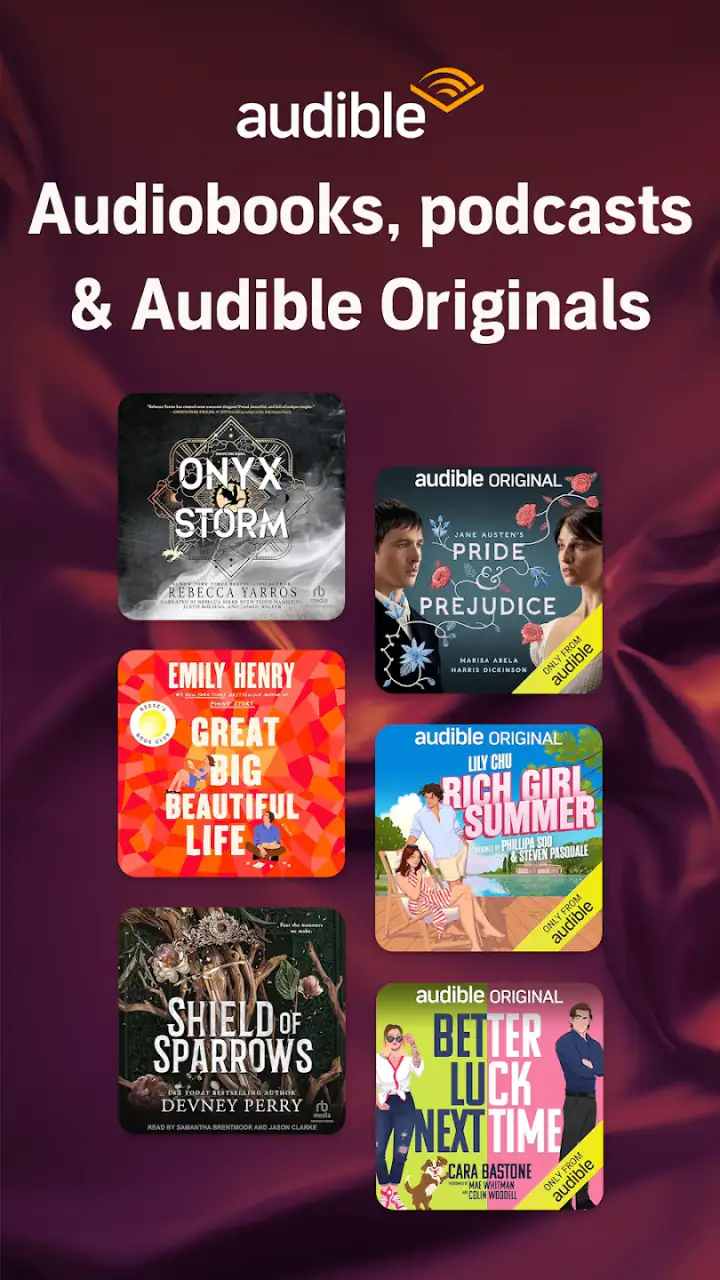
For fiction, narration can clarify dialogue and make a large cast easier to follow. For nonfiction, a voice can make a difficult subject feel more approachable, though I still prefer to pause and take notes when the material is dense. This is where expectations matter: an audiobook can improve access to a book, but it does not automatically make every idea easier to remember.
I recommend using playback controls deliberately rather than leaving everything at its default. When a sentence contains a key explanation, rewinding a little is more useful than hoping I will remember it later. During casual listening I can let the story move naturally; during study-oriented listening I slow down mentally by pausing after sections. The best results come from matching the pace to the content, not from trying to finish as quickly as possible.
Another practical strength is continuity. I can return to an unfinished title without reconstructing my place from memory, which matters when listening is spread across short sessions. That makes the service particularly appealing to parents, shift workers, and anyone whose day rarely provides an uninterrupted hour. A traditional physical book may still be better for highlighting, but Audible wins when the main obstacle is finding time.
Podcasts and books in one listening space
Keeping podcasts alongside audiobooks is convenient, but it also changes how I think about the app. A podcast is usually easier to sample, while a book asks for a longer commitment. Having both available means I can choose based on concentration instead of forcing myself to continue a title that does not suit the moment.
For news or true crime, I often want a shorter listening session and a clear stopping point. Fiction works better when I can return regularly and preserve the story’s momentum. The playlist can bridge those two habits, but I still think users should avoid filling it with too many unfinished choices. A crowded queue creates decision fatigue and makes the library feel less personal.
The combination also makes Audible a stronger alternative to using a basic music player for spoken content. Music apps may handle podcasts well, but they are not always organized around progressing through a long book. On the other hand, a dedicated podcast service may offer a more specialized discovery experience for listeners who rarely touch audiobooks. Audible’s advantage is breadth across both formats, not necessarily perfect specialization in each one.
The important trade-off: free entry versus paid listening
The free installation is a welcoming starting point, but it should not be mistaken for unlimited access to every title. Audible includes in-app purchases ranging from less than a dollar to nearly two hundred eighty dollars per item, so the cost of building a personal library can vary substantially. I would decide on a monthly listening budget before browsing deeply, because attractive recommendations can make impulse purchases easy.
This is the most important friction in the service. The app can be free to download while the listening experience still involves paid choices. That is not unusual for a large audiobook platform, but it affects how I judge value. Someone who wants occasional free spoken content may find the installation sufficient, while a heavy listener needs to understand which titles are included, which require a purchase, and how often they expect to listen.
I also prefer to compare the cost of an audiobook with how I will actually use it. A long novel that I will replay or keep in regular rotation may feel worthwhile. A title I am curious about but unlikely to finish deserves more caution. This is one reason the app works better for committed listeners than for people who collect books faster than they can hear them.
Compared with borrowing a physical book from a library, Audible is more convenient and immediate, but it may be less attractive for readers who are comfortable waiting or who want to avoid individual purchases. Compared with buying an ebook, it offers mobility and hands-free access, but ebooks remain better for scanning, searching within a text, and marking passages. I see Audible as a different tool rather than a universal replacement for either option.
Where the experience can become frustrating
The biggest weakness is not playback; it is the tension between discovery and commitment. A large catalogue gives me plenty to explore, yet it also means I can spend time comparing titles, narrators, and subjects before listening to anything. The playlist helps after I have made a choice, but it does not eliminate that initial browsing problem.
Audio also demands a different kind of attention from reading. If I miss a paragraph in a physical book, I can scan backward visually. With narration, I may need to rewind and listen again, and that can be irritating when interruptions happen frequently. I would not choose Audible as my only format for technical manuals, reference-heavy books, or anything I expect to quote precisely.
There is a similar limitation with learning. Listening is excellent for exposure and momentum, but retention depends on the subject and my concentration. I would use an audiobook to understand the broad argument of a history book, then switch to written material if I needed detailed dates, names, or comparisons. Anyone buying it mainly for serious study should plan a note-taking method rather than assuming passive listening will be enough.
Another trade-off is that narration style is highly personal. A book can be well written yet difficult for me to enjoy if the voice, rhythm, or character choices do not fit my taste. I pay more attention to the narrator information before committing than I used to. That simple check prevents a disappointing purchase better than relying only on a title’s popularity.
Who should use it, and who should look elsewhere
I would recommend Audible to commuters, walkers, frequent travelers, busy parents, and readers who struggle to find uninterrupted visual reading time. It is also a good match for people who enjoy moving between fiction, news, true crime, and podcasts without maintaining several separate listening habits. The app’s real strength is flexibility: it turns spare minutes into a continuing relationship with a book.
It is less suitable for someone who mainly wants free podcast discovery, detailed academic annotation, or an inexpensive way to sample many books without buying them. A library app may be the better first choice for budget-conscious readers, while an ebook reader is more practical for reference work. If I only wanted occasional podcasts, a podcast-focused alternative could feel simpler and less commercially distracting.
Families should also pay attention to the Teen rating and choose titles thoughtfully rather than assuming every item shares the same tone. The rating describes the app’s general audience level, not the subject of every audiobook or podcast. I would review a title’s description and narrator before handing the device to a younger listener.
For new users, my advice is to begin with one book and one podcast rather than building a huge queue. Listen in two different situations, such as a quiet walk and a household chore, then decide whether the format genuinely fits your routine. If a book feels too demanding, move it to a focused listening slot instead of abandoning the whole service. This small experiment gives a more honest answer than judging the app after a few minutes of browsing.
My final assessment
Audible: Audio Entertainment succeeds because it understands that listening is often squeezed between other responsibilities. Its mix of audiobooks and podcasts, playlist-based organization, and established presentation make it a strong choice for turning everyday movement into reading time. I especially value it when I want to continue a book without carrying a physical copy or staring at a screen.
Still, I would not call it the best option for every reader. The paid catalogue requires discipline, narration is not equally suited to every kind of book, and serious study may demand a written companion. The free app is an accessible entry point, but the real value depends on choosing titles carefully and listening often enough to justify the expense.
Audible was released on August 12, 2010, and its longevity shows in the confidence of the overall experience. With a free price to install, a Teen rating, and a substantial selection spanning spoken books and podcasts, it earns my recommendation for people who want audio to become part of their daily routine. My clear verdict is to try it if your main problem is lack of reading time, but compare alternatives first if your priority is free access, detailed annotation, or occasional podcast listening only.
FAQs for Audible: Audio Entertainment
What is Audible and how does it work?
Audible is an audio entertainment app that offers a vast library of audiobooks, podcasts, and audio shows. Users can purchase and listen to content on the go. It works by allowing users to download or stream audio content directly to their devices, offering a seamless experience for audiophiles and book lovers alike.
Is there a subscription fee for Audible?
Yes, Audible operates on a subscription model. Users typically pay a monthly fee, which includes a credit for one audiobook per month. Additional content can be purchased separately. There may also be a free trial period available for new users, allowing them to explore the platform before committing.
Can I listen to Audible offline?
Absolutely! Audible allows users to download their audiobooks and other audio content for offline listening. This feature is particularly useful for those who travel frequently or have limited internet access, ensuring uninterrupted entertainment wherever you are.
What devices are compatible with Audible?
Audible is compatible with a wide range of devices, including smartphones, tablets, and computers. It supports both iOS and Android platforms, along with integration into devices like Amazon's Alexa-enabled speakers, making it accessible to a broad audience across various ecosystems.
Can I share my Audible books with others?
Audible has a feature called 'Send this Book' which allows users to share a book with friends. The recipient can listen to the book for free, even if they're not an Audible member. However, this feature can usually only be used once per book, making it a great way to introduce friends to Audible.
Pros
- Extensive library of audiobooks available.
- High-quality narration by professional voice actors.
- Download books for offline listening.
- Adjustable playback speed and sleep timer.
- Seamless integration with Amazon services.
Cons
- Subscription required for full access.
- Limited free content available.
- App size can be large on devices.
- Occasional syncing issues across devices.
- Some regional restrictions apply.


